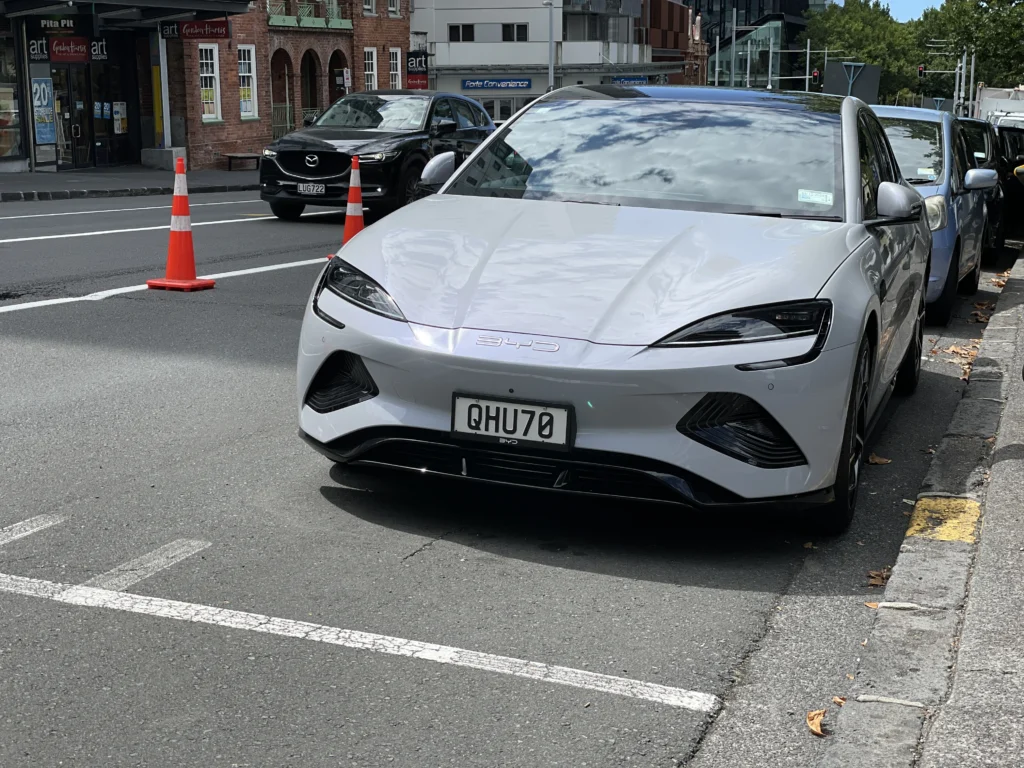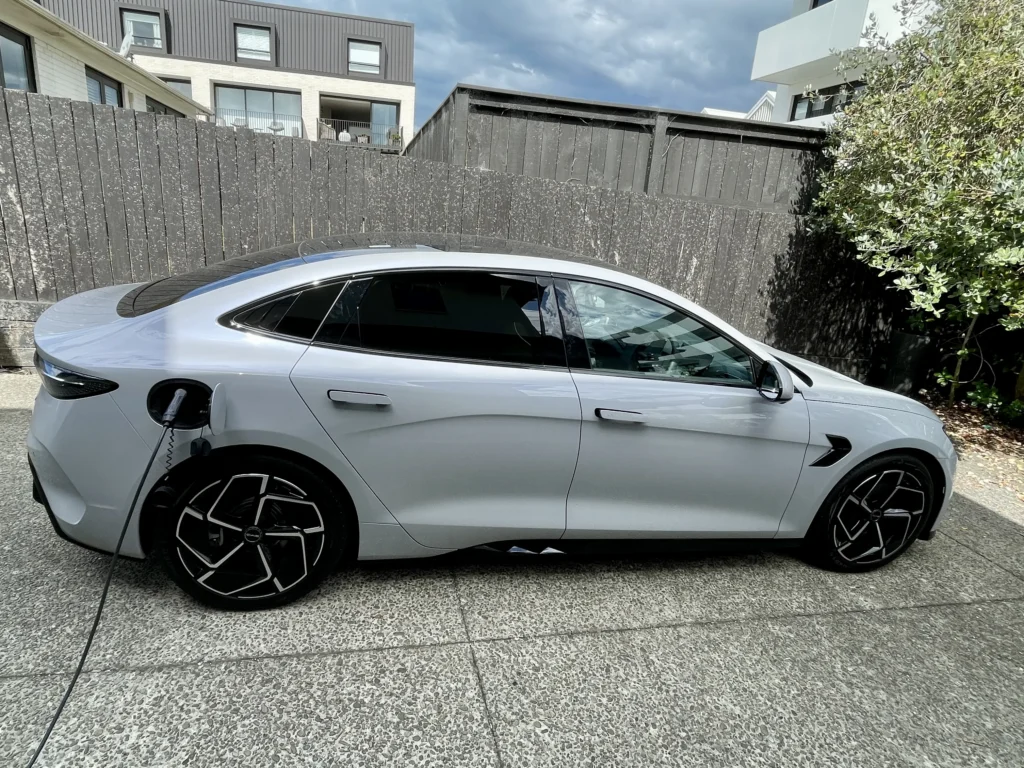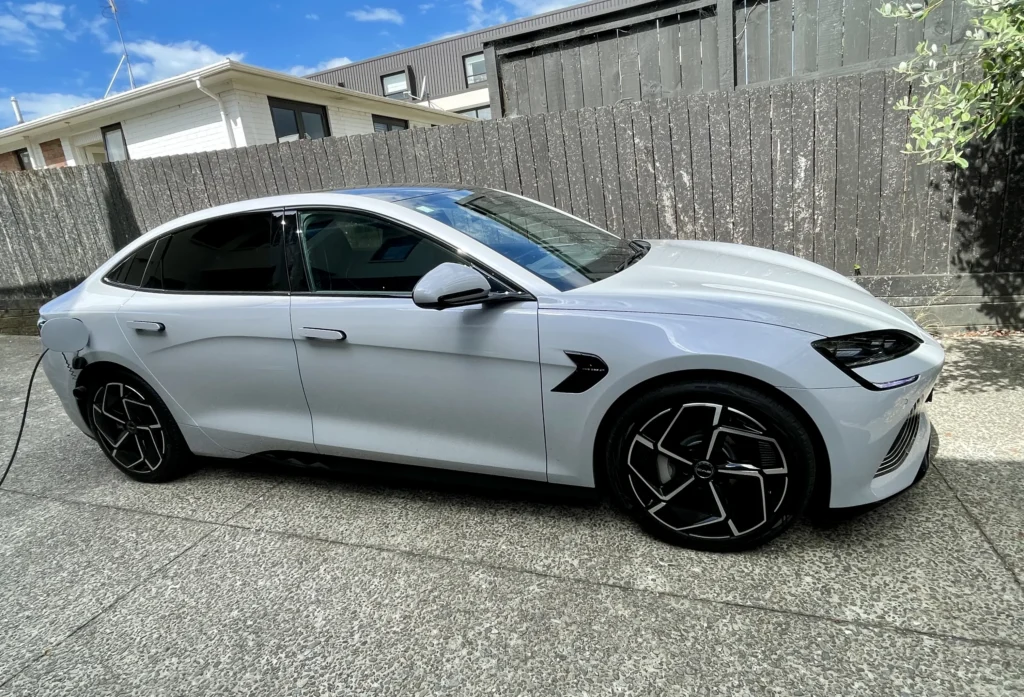


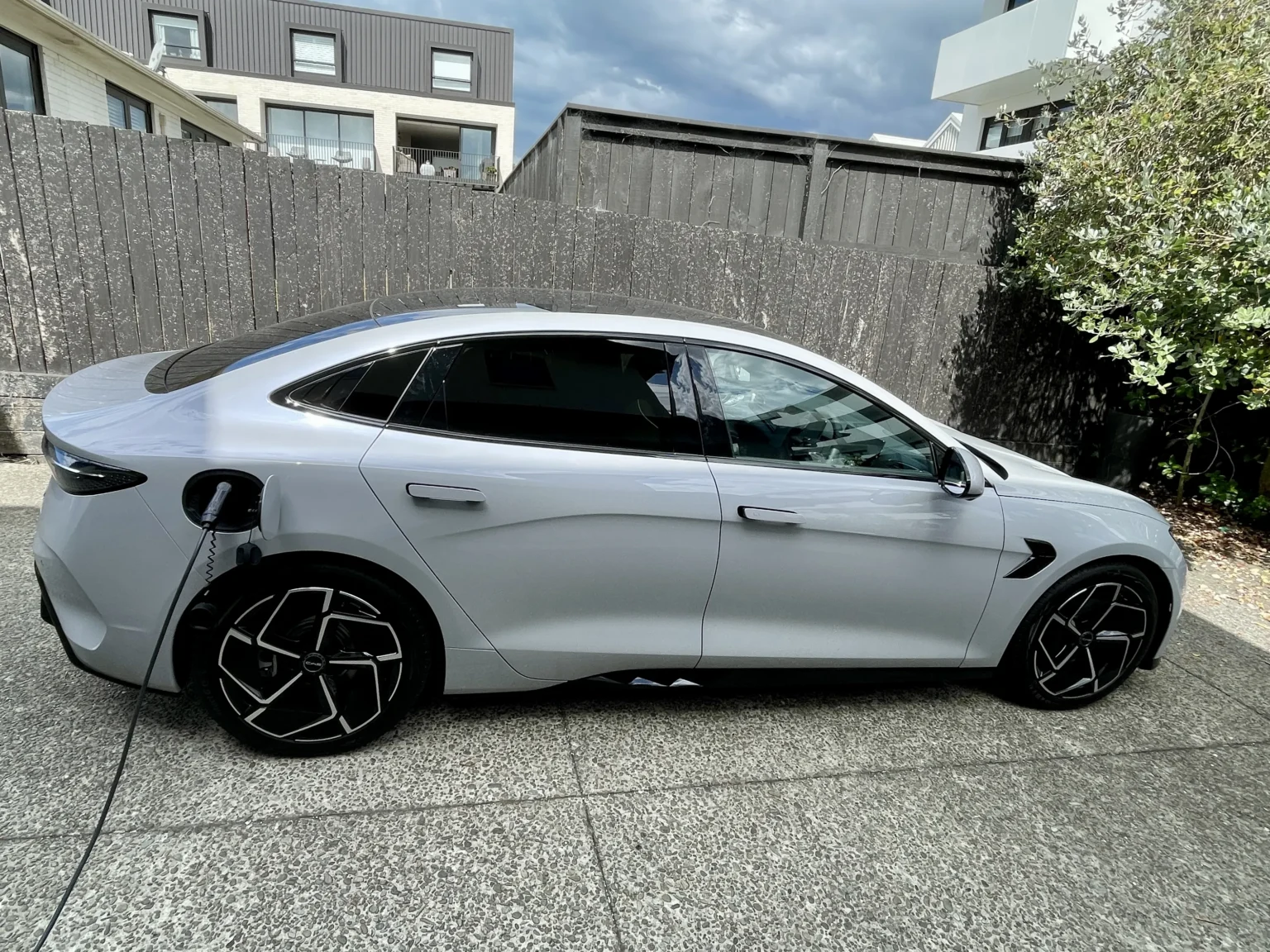
My impressions of the BYD Seal are positive. It looks stylish, if derivative, it mimics a premium brand inside and out. The cabin stays quiet, ride quality feels good. The look and feel of the internals pass the test. A functional heads-up display, a clear driver information screen, and a large rotating console screen provide loads of data. Sometimes the driver screen shows too much, a couple more buttons would be nice. Entertainment and media integration work.
Power delivery feels smooth, and it avoids a wallop of torque. The brakes perform reasonably well while regeneration control offers choice of standard and extended modes. I got a little excited (it’s fast) and I found that the indicators sometimes activate during hard acceleration or braking! A pinch point in the central storage area creates the only physical flaw. Otherwise, it compares to others in this class. Upholstery reminds me of a European style. Seats provide comfort, though they feel large, I struggled to find a perfect position. A six-foot-tall friend found them ideal. Space at the front is good and the rear feels reasonable. It almost reaches large saloon dimensions.
Handling falls short of what I was hoping for. Bumps during corners upset the car. It gets scattered and takes time to reset. Most people might ignore this or put up with it. I should probably just slow down bit it does not reach the level of a European peer and the suspension feels soft for New Zealand conditions. The car feels rather bulbous when maneuvering, the 360-degree cameras help, but I still made mistakes in positioning.
This four-wheel-drive model features motors at the front and back. EV acceleration feels outrageous. A good package requires acceleration, braking, and handling to sit at equivalent levels. This car offers titanic acceleration, hitting 100 in 3.8 seconds. However, average brakes and below-average handling break the balance. It drives like a 2005 Camry around corners despite supercar speed. Selecting Eco level suits the car better. I would worry about a learner driver moving out of Eco mode!
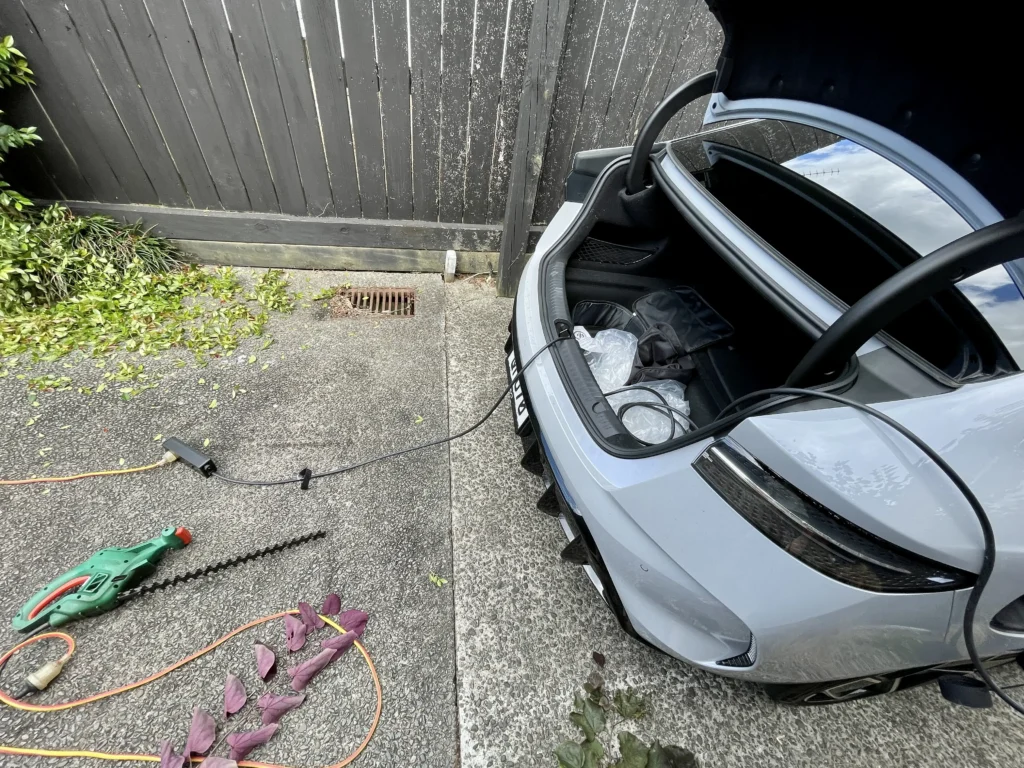
While well laid out, Steering wheel real estate feels scarce, so the dedicated screen rotation button is a bizarre choice. Driver aids and controls cause annoyance through excess warkings – so I just ignored them all. Adaptive Cruise Control works but uses basic five-kilometer increments. Lane hold was unmanageable – it fails to center the car. I turn it off. A backup warning exists for dramatic moments, which I tolerate. The sheer number of noises and warnings creates a problem. To much tech as the expense of drivability here. I expect this will be improved with an over the air OTA update. But with that technology : a brilliant feature: The vehicle-to-load function should be standard on every EV. I powered my electric hedge trimmers using the adapter. I skipped the power cord from the house and backed the car to the hedge. It handled the task with zero emissions. Some people run camping equipment for a week this way. All cars should offer this.
The car feels like a product of two halves. One feels high-end and thoughtful. The other suggests the makers do not know their market or how to create a rounded car. You quickly realise an established manufacturer did not build this – that it hails from a newcomer. If you can live with the incongruencies and warnings, this car is actually good value. It fits an executive saloon setting, I understand why many will like this. It’s going to do well in NZ and I bet that it will be improved in the near term. Overall it’s very good value for a nice car with a few quirks. There are three variants, and my money is on the Premium 2wd as it had the longest range. You are going to consider this is you are thinking Tesla Model 3 or similar.
BYD Seal New Zealand Variant Comparison
| Feature | Dynamic (Standard) | Premium (Extended) | Performance (AWD) |
|---|---|---|---|
| Price (MSRP + ORC) | $58,990 | $65,990 | $76,990 |
| 0-100 km/h | 7.5 seconds | 5.9 seconds | 3.8 seconds |
| Drivetrain | RWD (Rear) | RWD (Rear) | AWD (Dual Motor) |
| Max Power / Torque | 150 kW / 310 Nm | 230 kW / 360 Nm | 390 kW / 670 Nm |
| Battery | 61 kWh | 82 kWh | 82 kWh |
| Range (WLTP) | 460 km | 570 km | 520 km |
| Max DC Charging | 110 kW | 150 kW | 150 kW |
| Wheel Size | 18-inch Alloy | 19-inch Alloy | 19-inch Alloy |