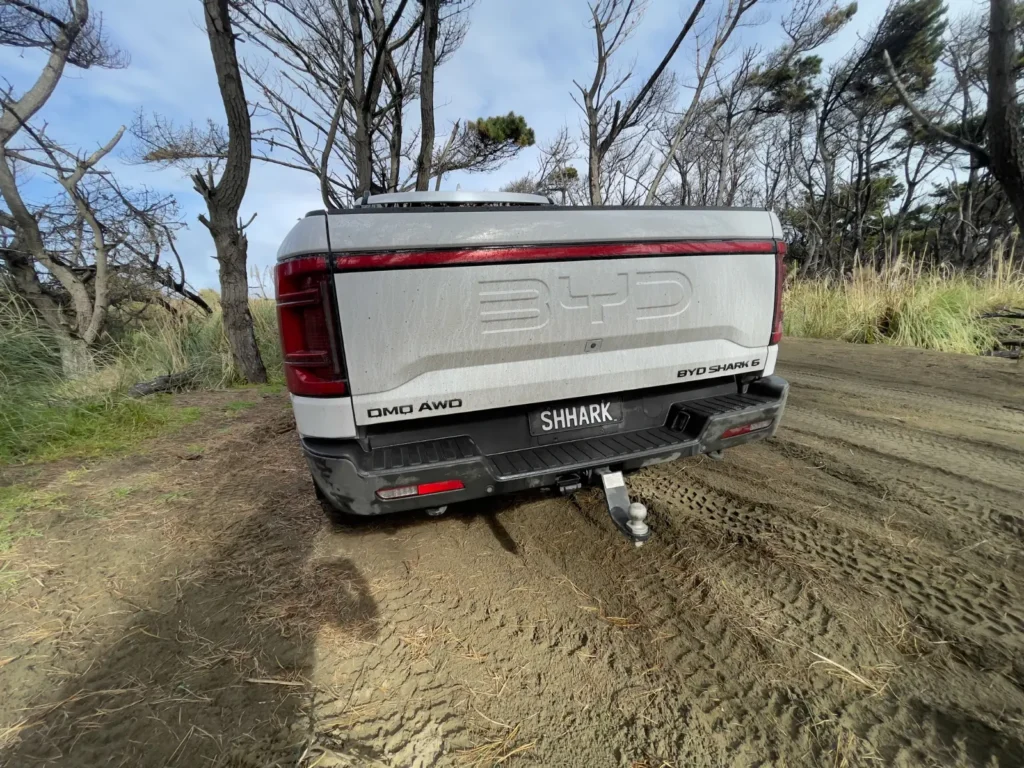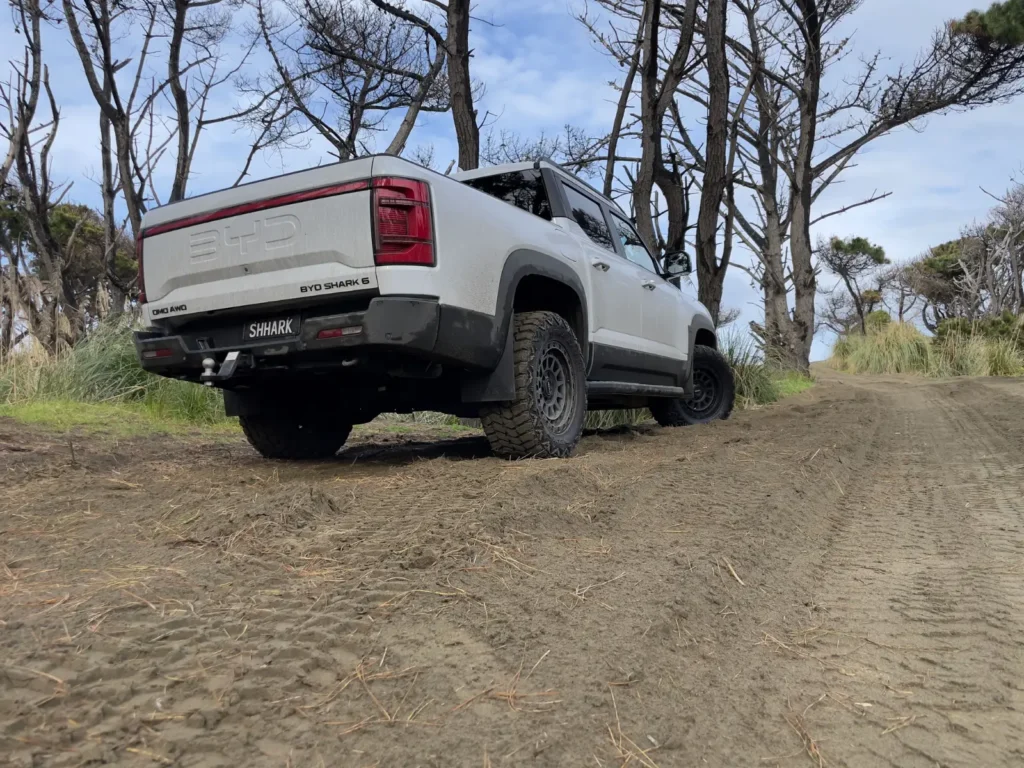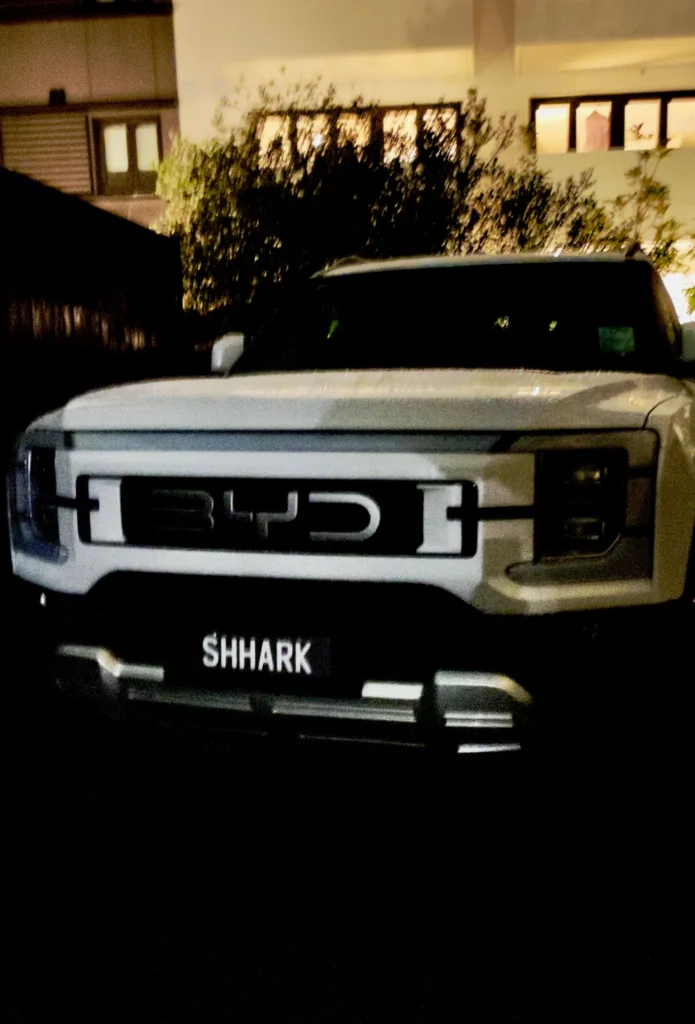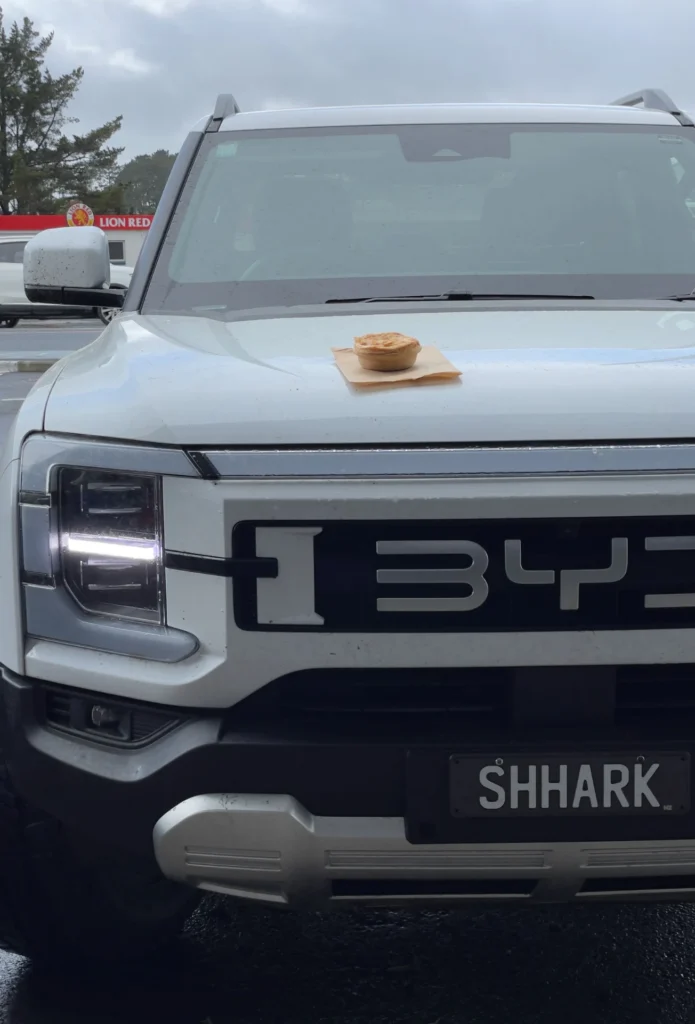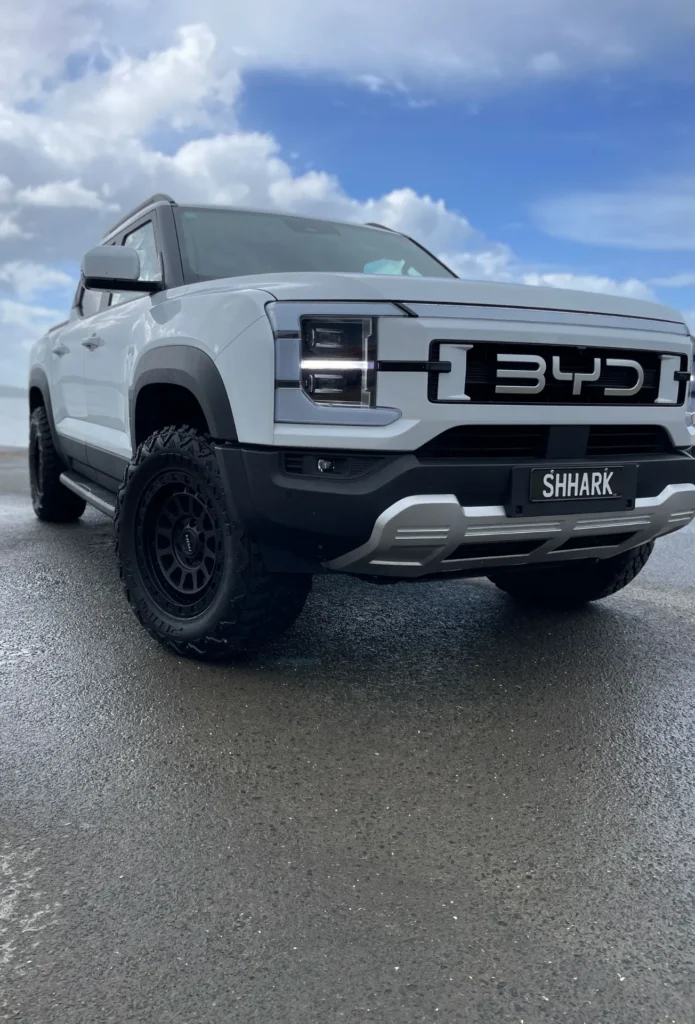

I am sitting in this BYD Shark, and first impressions are that I’d rather like it, yep, it’s rather likable. The exterior is bold without making any unusual design choices. Clearly, BYD have had a look at their closest competitors in the space, the Ford Ranger and Toyota Hilux, and nestled comfortably in that space, with the Shark looking slightly tougher than the latter.
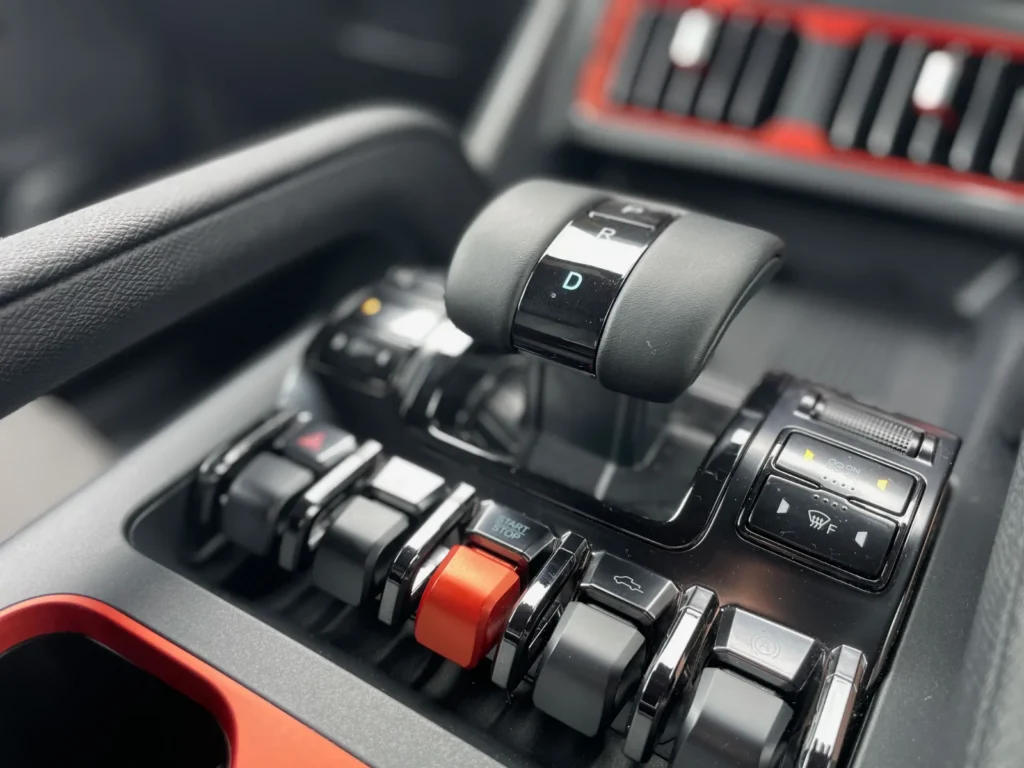
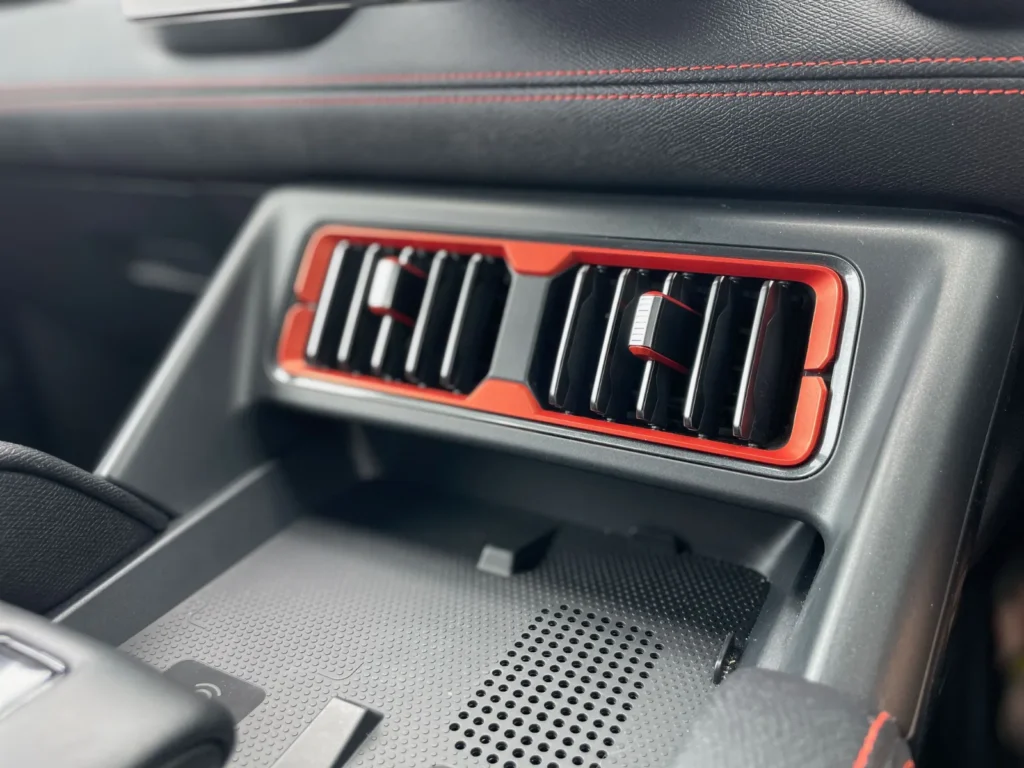
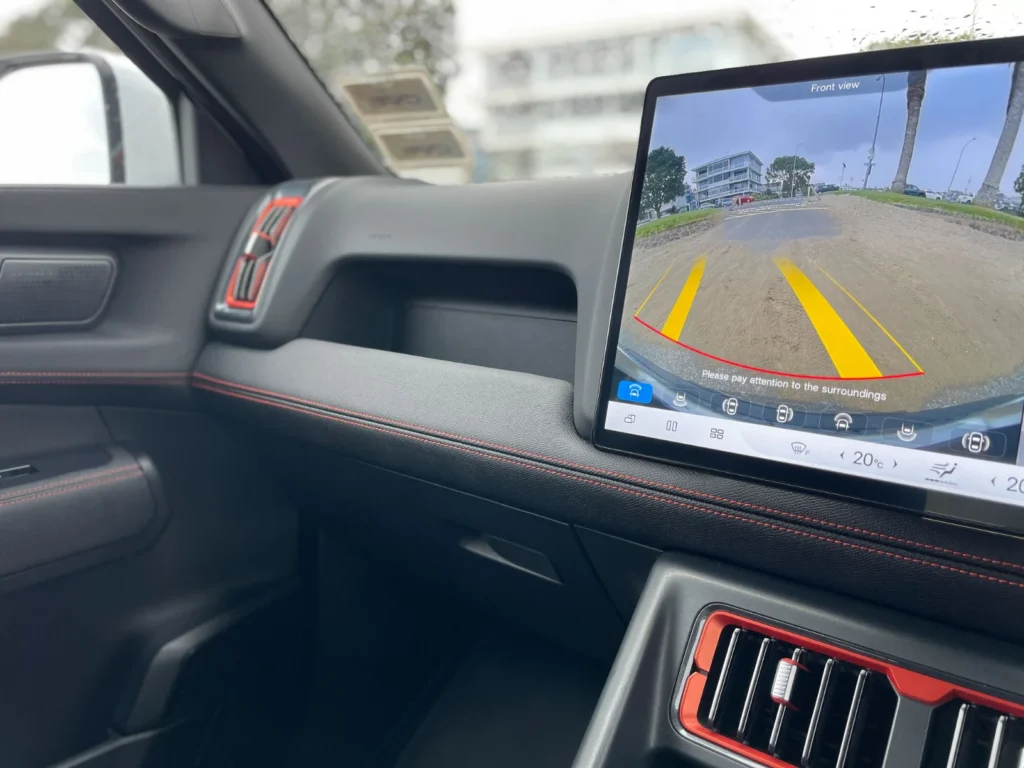
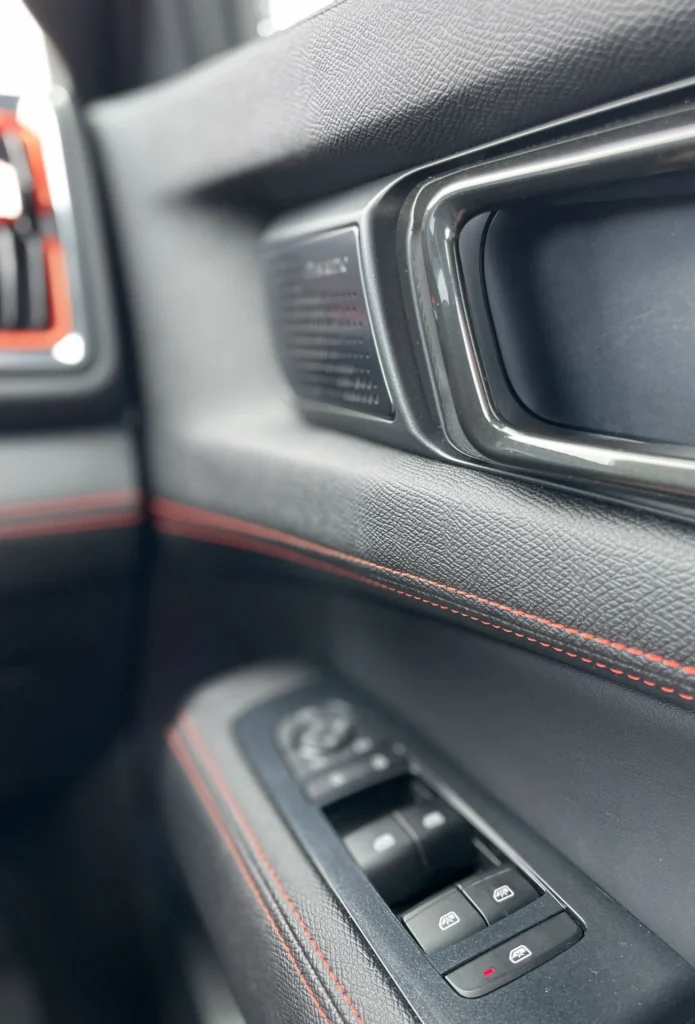
The interior is very good, with strong design choices that align with what you expect to see, and lots of buttons. The center control area is right where your hand rests and gives you buttons for common actions, and gear control is right in the middle. Yes, it’s got the BYD expansive rotating screen, but most of the time you only need that for navigation and entertainment; you don’t need it for any driving. The heads-up display has taken another step up from the last BYD that I drove, and now it shows you turn-by-turn directions directly out of Google Maps, which is something I haven’t seen with many other manufacturers. The technology is here, and BYD have been smart and hidden it where possible. Instead, they’ve presented you with logical things like handsome vents, good handles, and attractive stitching, going through a practical internal material that is tough but with a subtle squishiness to it to save your knees when you’re driving over potholes.
Door handles are easy. The stereo is good without being great – it’s a little bit center-weighted for my preference – however, you can turn it up to a high level with no distortion. It’s a vehicle that’s taken the New Zealand and Australian ute scene by storm. It’s got attractive pricing, so the value segment makes it a serious consideration, and there’s no particular gotchas with it. It’s one of the best-looking Chinese vehicles I’ve seen. Dark display mode was a vast improvement and matched the car perfectly.
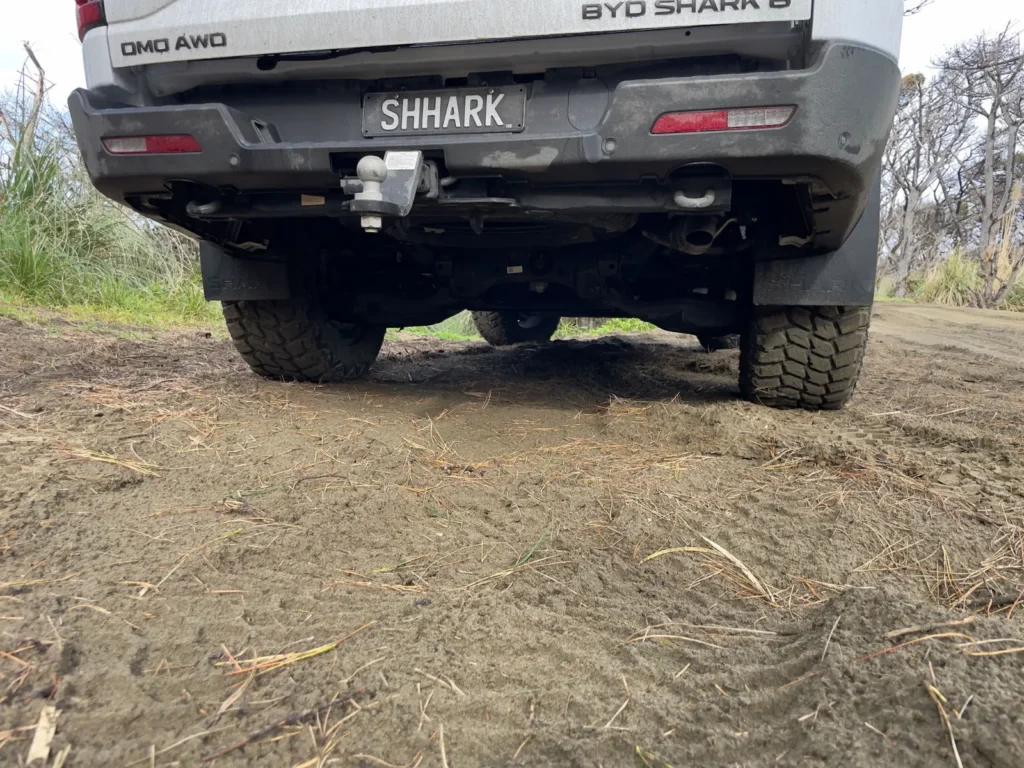
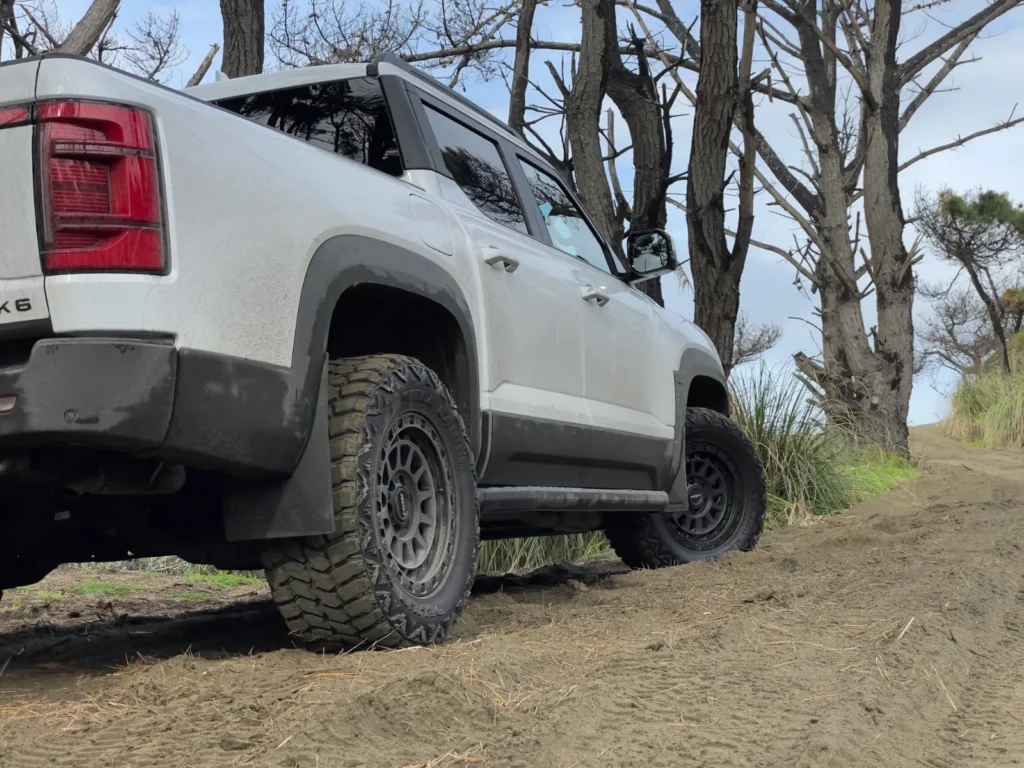
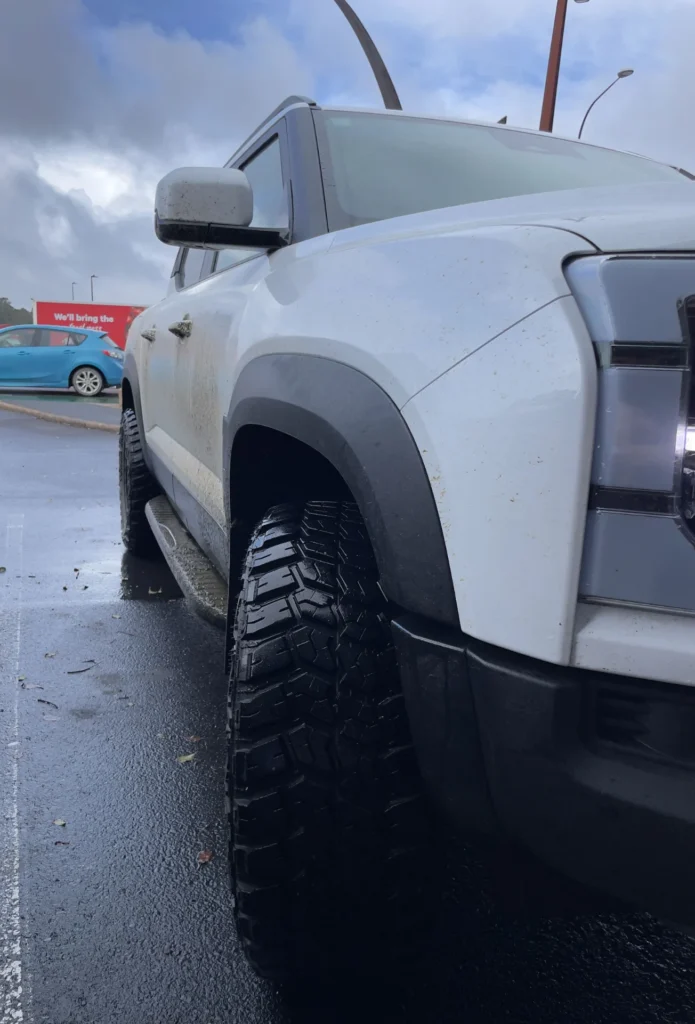
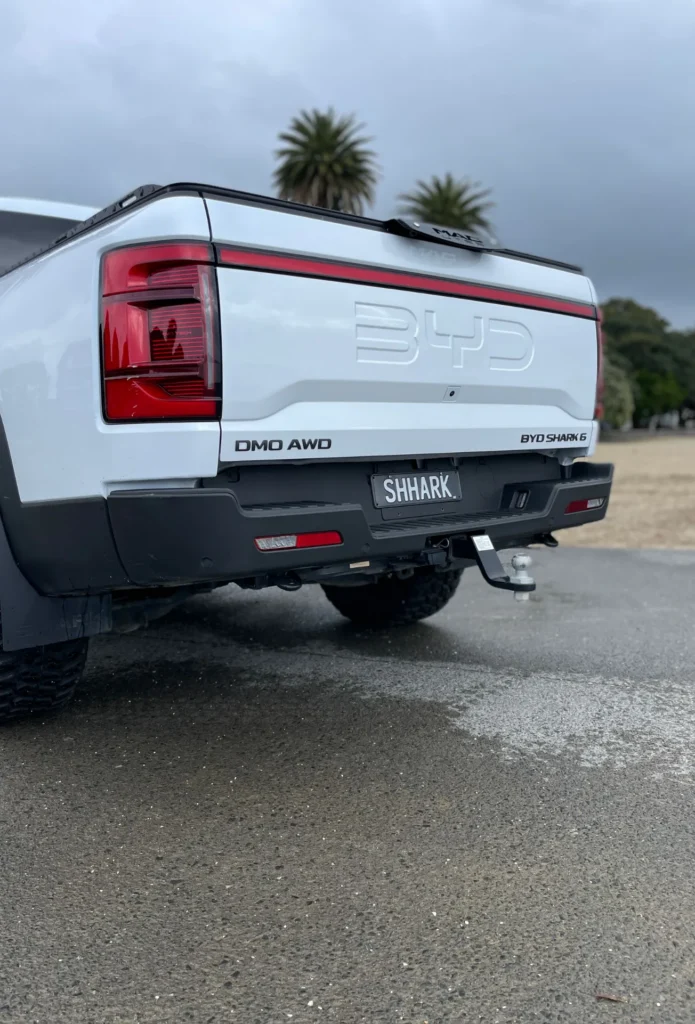
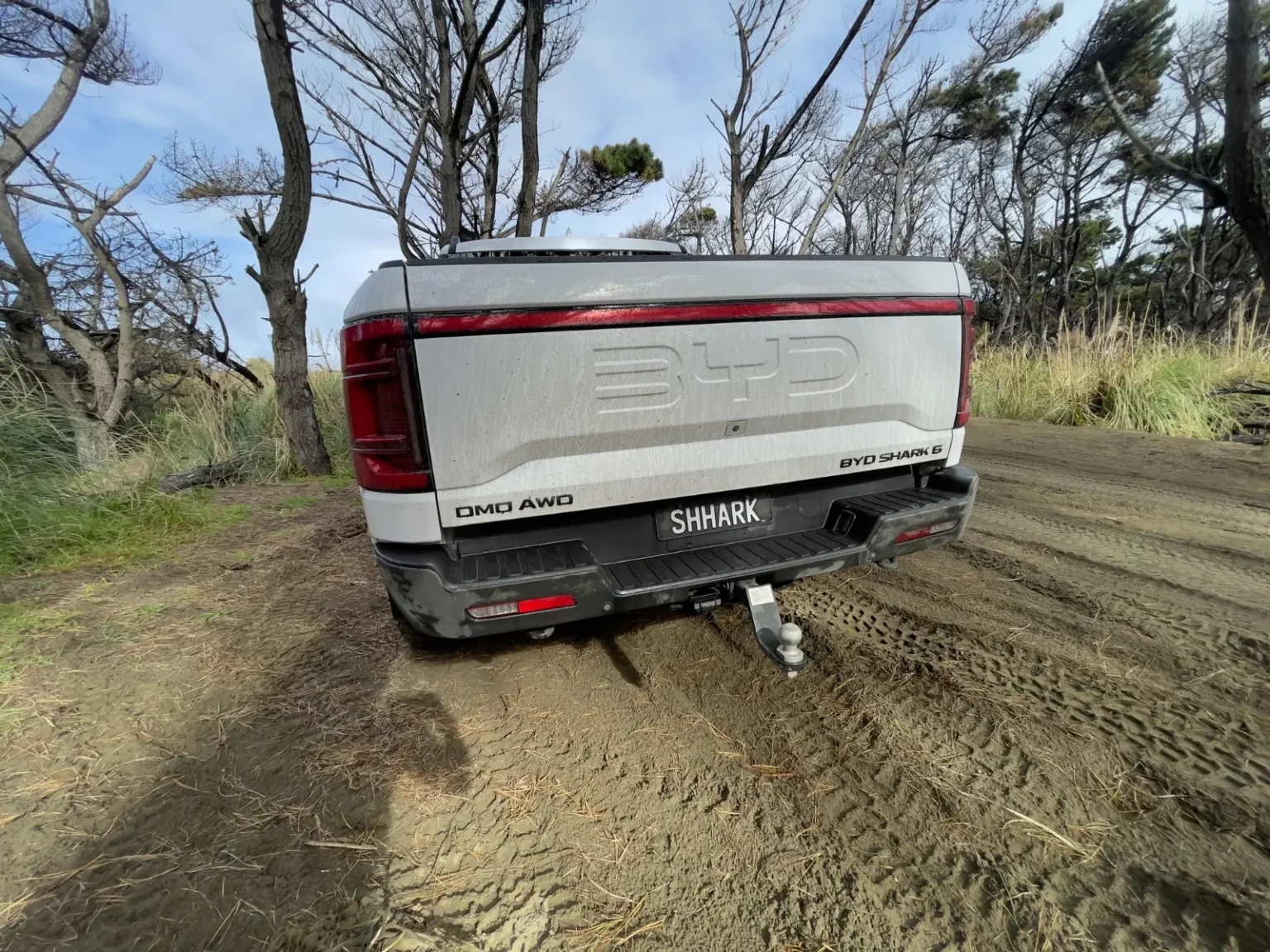
The model I’m driving is the top-spec version, amped up further with hardcore mud tires, great rims, and a hard cover on the flatbed. It looks like they’ve used local accessories, which is a nice touch. On these tires at low speed, you get an understandable amount of road noise. It’s something you wouldn’t have noticed in the days when every 4×4 was powered by an internal combustion engine, but here it’s so silent you can pick it up. What’s louder is the vibration it develops at the upper speed limit. I’m told it’s the tires, but I can’t confirm that.
The powerplant is a really interesting and suitable drivetrain. With a whopping 321kW of power and 650Nm of torque, this thing pumps out more grunt than anything in its class and will do the 100km/h sprint in a 5.7-second dash that feels even faster – pretty amazing for a 2.7-ton vehicle. It’s driven by two motors, one front and one rear. It dispenses with a rear drive shaft, giving you good passenger access, but it still has traditional mechanical differentials, which is not a bad thing.
Then comes the twist: it’s a hybrid range extender. There’s a near silent 1.5-liter four-cylinder engine that keeps your battery charged to whatever level you decide, or it just manages itself. So essentially, it’s always EV driving with a small engine to top up that battery. There are no complications with handing over drive from one system to another and very good torque mapping, which makes it great to drive – almost like an ICE car. An easy push of a button flicks it into electric-only, which is great for driving around in a parking structure.
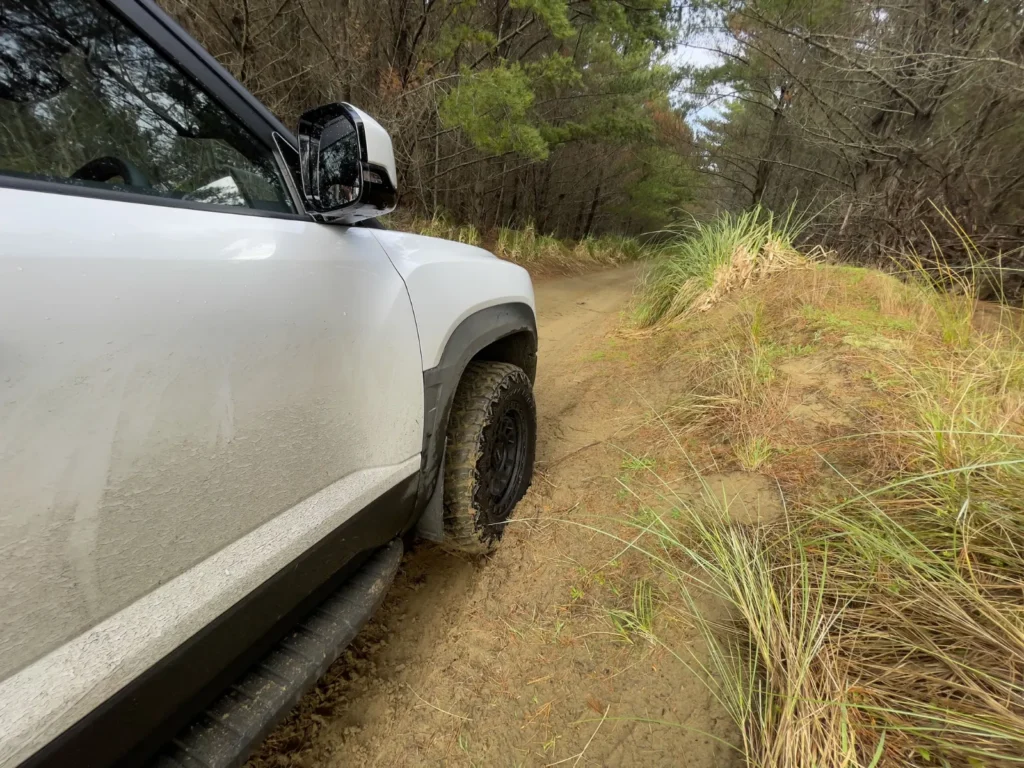
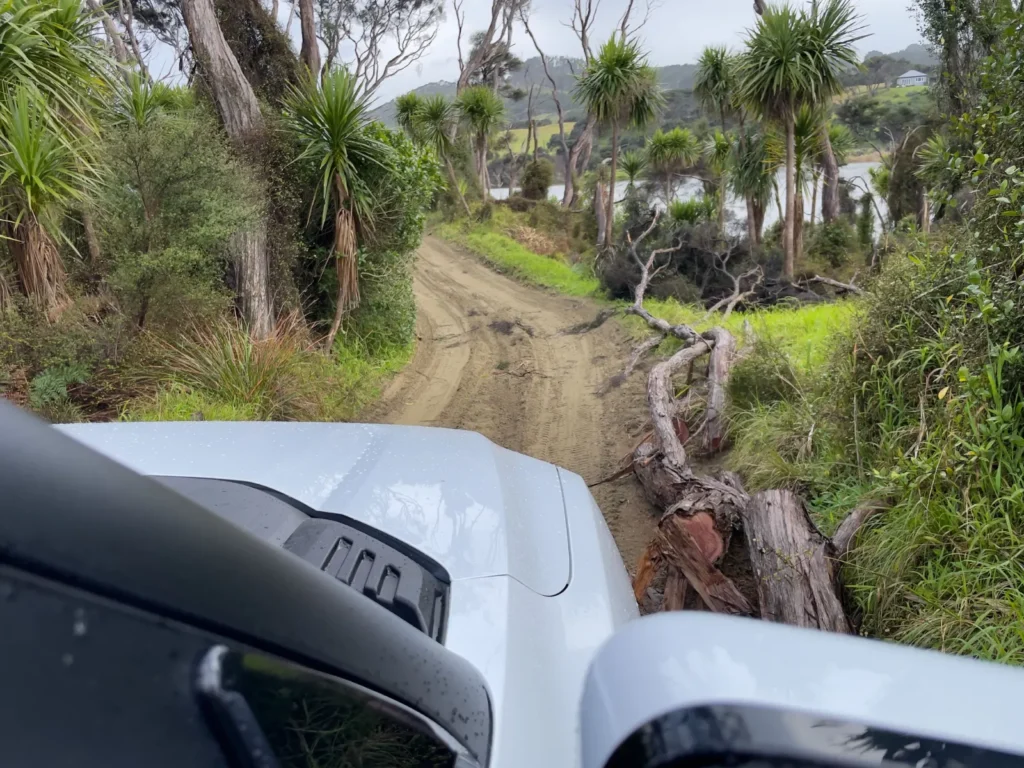
Anytime I’ve got a vehicle of interest, I take it on a road trip of varying length. I always try to do a task suitable to the vehicle, and this time I had an urgent need to go off-roading. To do this, I removed the tray hard cover, which is a two-person job but otherwise easy. Underneath, the tray is quite sizable and has a spray-on bed liner, meaning you could pretty much put a bomb in there and the back is going to survive. Anywho, who would have known the Chinese knew how to make a truck? It’s not tiny; it’s mid-size. I spoke to a guy there who is a motocross rider, and he noted it’s the perfect size for hauling bikes because it’s not too big. The last few kilometers off-road to the trail were gravel, and the Shark settled down and liked the rougher stuff. Turning onto the bumpy track that started as mud and evolved into sand, the vehicle came into its own. It’s got these super capable tires on it, and that helped. The vehicle handled the potholes and unusual approach angles impressively. I wasn’t trying to get it stuck, but on this part of the trail, there were no traction issues at all. We exited the trail through the forest and onto the upper dunes, and ripped through the soft sand with no problem. On the sand, the vehicle felt planted. In fact, we had to actively ensure we didn’t go faster because it’s virtually silent in EV mode. I charged the battery on the road so I’d have full EV on the beach, and what a wonderful way to enjoy the New Zealand coastline. If you’ve got a 4×4, you owe it to yourself to go to Muriwai Beach, register for a free permit, and follow the rules. Incredibly, we drove for over 15 kilometers without seeing another vehicle.
The best time to drive on the beach is the latter part of the retreating tide when the sand is hard. We kept down near the sea, but not in it. To test the traction, I edged into the softer sand (in sand mode) until we were comfortably axle-deep. At this stage, the car informed me it didn’t want to go forward any further. With this electronic style of drive, it just stopped making progress without spinning the wheels. I backed out along my own wheel tracks to the wet sand without any issue. It’s good to know you’ve got something in reserve. 40 psi is the street pressure, but you can happily drop it to 10 psi. The vehicle has a sensor that tells you the pressures, and I like to carry an air compressor for the return journey. The exit path was the softest sand we’d been in, and we churned through with no issue, though I was pleased to have the super chunky tires for that section. Afterwards we finished off with a pie – Kiwi as!
My off-road verdict is that it’s very good and more than capable. Only once did the articulation reach its maximum. I do miss having manual overrides; knowing I can manually lock a diff is reassuring. I’ve recently driven this beach in another major model and couldn’t make it off without the diff lock, so BYD are doing something right with their axle management. In sand mode, it does an impression of low range, running the engine at high revs to ensure full voltage is available for the electric drive.
Because it’s heavy at 2.7 tons, it can bottom out in sand. While this configuration is destined for off-road, I’m certain it would be very pliable on the roads with normal tires and rims. On-road driving on these tires isn’t ideal due to vibrations at 100km/h and some shudder on corrugated corners, but it didn’t feel unsafe, just unusual. With the tough bed liner and hard cover, it would make a good tradie’s ute – it looks the part too.
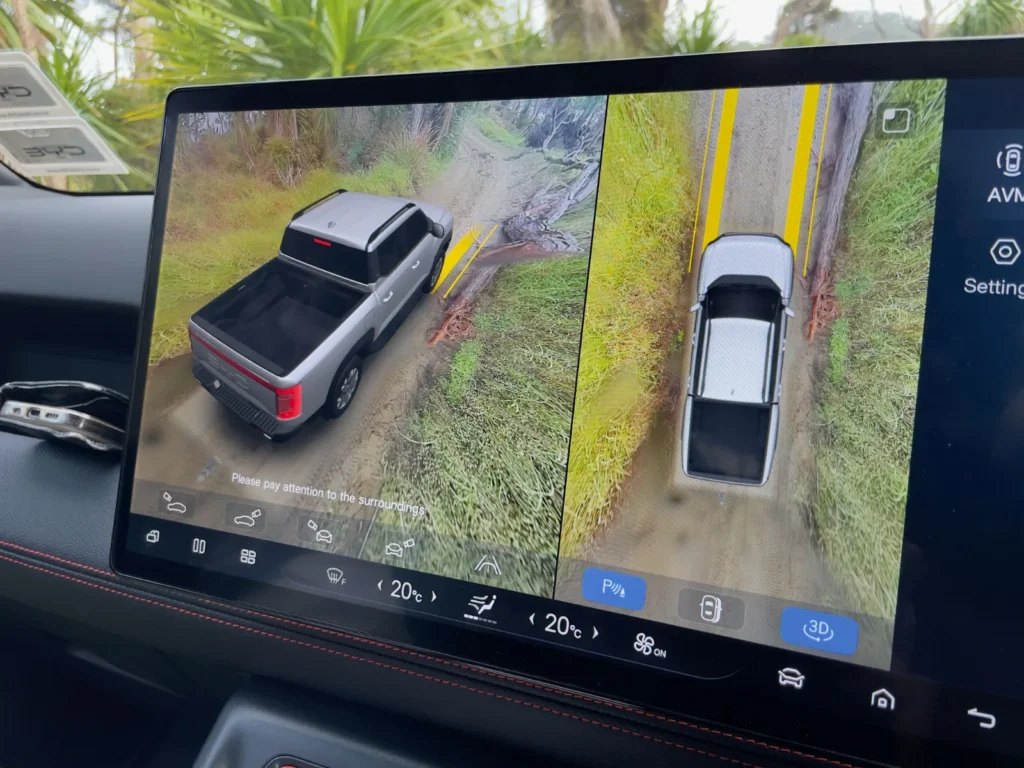
The seats are reasonable, and this version came with canvas covers to protect against mud and sand. Pleasingly, there are very few reflective surfaces in the vehicle. There were fewer warning beeps than other models of the same brand, which was tolerable and sensible. The cameras were good, letting you swivel around the car to avoid downed branches in the forest. It’s confidence-inspiring around town and easy to drive, with plenty of power. I wouldn’t use this as my everyday vehicle only because it’s a bit too big for tight car parks, but if I needed a vehicle for work or play, it’s definitely a strong contender.
The BYD Shark 6 is a powerful and surprisingly refined entry into the ute market, effectively bridging the gap between traditional utility and modern electrification. Boasting great grunt from its dual-motor range-extender drivetrain, it offers class-leading acceleration and a seamless EV-first driving experience that challenges the dominance of diesel rivals. It stands out as a high-value, tech-forward contender for those seeking performance and efficiency without sacrificing rugged versatility.
Pricing from $69,990 MSRP + ORC
BYD Shark 6 (Premium AWD) Technical Specifications
| Feature | Specification |
|---|---|
| Powertrain | 1.5L Turbo 4-Cylinder Plug-in Hybrid (DMO) |
| Combined Power | 321 kW (approx. 430 hp) |
| Combined Torque | 650 Nm |
| Acceleration (0–100 km/h) | 5.7 seconds |
| Battery Capacity | 29.58 kWh |
| Pure EV Range (NEDC) | Up to 100 km |
| Combined Driving Range | Up to 800 km |
| Transmission / Drive | E-CVT / Electric AWD |
| Towing Capacity (Braked) | 2,500 kg |
| Kerb Weight | 2,710 kg |
| Ground Clearance | 230 mm (Unladen) |
| Approach / Departure Angle | 31° / 19.3° |